These four Japanese properties sell a berth or a cabin rather than a room, and two of them are bathing places that happen to put people up for the night. The arrangement is old, practical and specific to its cities, and it asks a guest to follow a sequence: shoes at the door, the bath, then sleep. Each entry keeps to what the operators publish.
Sauna & Capsule Hotel Century Shibuya
Tokyo, Japan
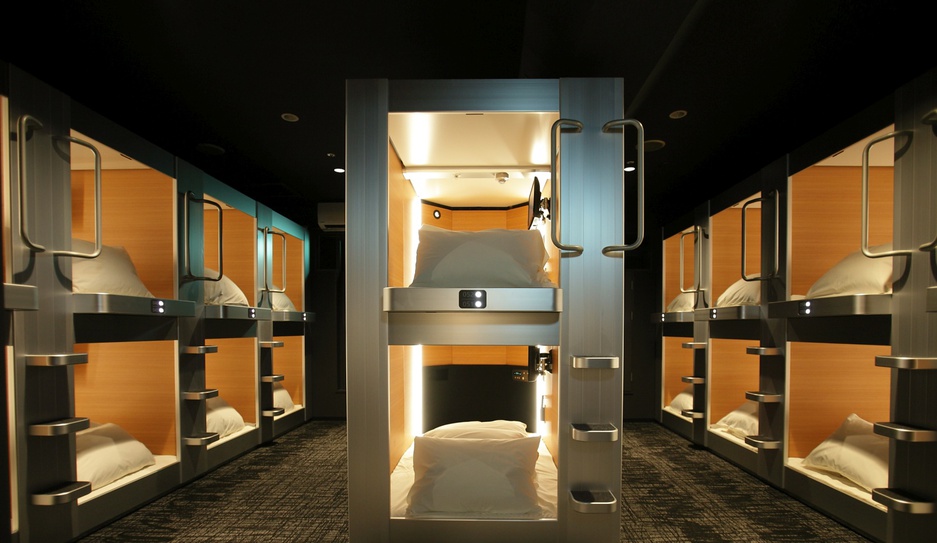
THE PLACE | Shibuya is one of the busiest districts in Tokyo, and this place sits inside it as a bath first and a bed second. Guests arrive from the street, hand over their shoes, and move up through the building in the order it sets: bath, rest, then a berth for the night.
THE BUILDING | The building holds a sauna and bathing rooms on one part and capsule berths on another, run together as a single house. That pairing is the whole idea of it, and it belongs to a Japanese tradition in which a bath is the reason to come and sleeping is what follows rather than the other way round.
WHY IT IS LIKE THAT | A district this busy runs late, and people finish an evening far from home. A bath with berths above it answers that more neatly than a hotel would, because it gives a guest somewhere to wash, to sit still and then to sleep without booking weeks earlier.
WHAT IT ASKS OF YOU | Shoes into a locker at the door, and then the customs of a Japanese bath: wash before entering the water, dry off properly before going up. Guests are asked to keep quiet on the sleeping side, where a curtain is all that separates one berth from the next.
WORTH A NOTE | Sleeping sections here are usually single sex; check which section your ticket admits you to before you undress.
Put down · July 2026
Sky Spa Yokohama
Yokohama, Japan
THE PLACE | This one is above Yokohama station, high enough that the bathing rooms look out over the city and the harbour beyond it. Guests come up from the concourse without going outside, which makes it a place people use between trains as readily as they use it for a night.
THE BUILDING | It is a spa with sleeping accommodation attached: bathing rooms, rest areas and capsule berths run as one operation on the upper part of a building over the station. The property publishes itself in exactly those terms, as a spa first, with the berths offered to guests who want to stay until morning.
WHY IT IS LIKE THAT | A station this size moves people at every hour, and some of them finish the day after the last train. Putting a bath and a bed directly above the platforms means a guest never has to cross the city, and the view is a by-product of building high.
WHAT IT ASKS OF YOU | Shoes off at the entrance, the ordinary bathing customs, and quiet after hours. Because many guests arrive late and leave early, the house asks people to move through the sleeping section without conversation and to use the rest areas for anything else.
WORTH A NOTE | You pass through the bathing rooms to reach the berths, so pack for a place entered barefoot rather than in shoes.
Put down · July 2026
Capsule Hotel Cabana
Osaka, Japan
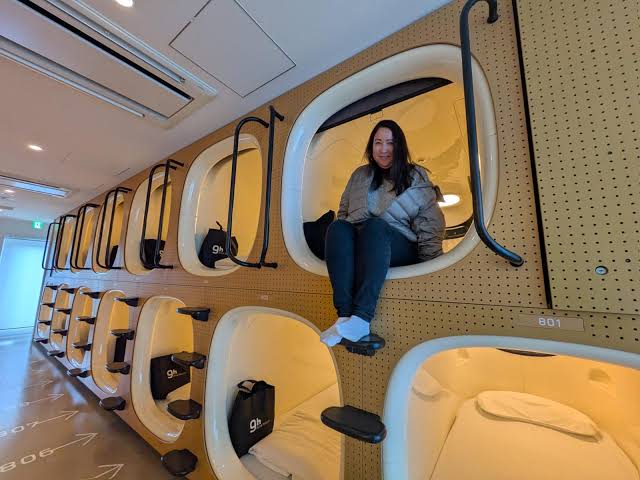
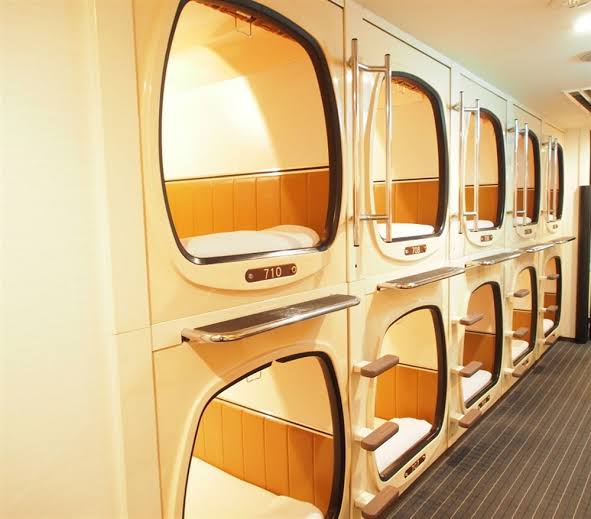
THE PLACE | Cabana is an Osaka capsule hotel of the ordinary, unglamorous kind, which is what makes it worth describing. Guests check in, take a locker, and find a berth in a bank of them, with a shared bathing area and a common room where anyone who is awake tends to end up.
THE BUILDING | The accommodation is a berth rather than a room: a moulded unit with a curtain or a panel at the opening, stacked in banks along shared passages. Everything else in the building is shared, which is the arrangement Japanese capsule hotels have used since they first appeared in this city.
WHY IT IS LIKE THAT | Osaka is where the format was invented, for people working late in a city with long commutes. A berth costs a guest less than a room and asks less of the building, so a house can put many people up in the space a small hotel would need.
WHAT IT ASKS OF YOU | Shoes off at the door and into a locker with your key. After that the house asks for quiet at every hour, because somebody is always asleep, and for luggage to stay in the locker rather than beside the berth.
WORTH A NOTE | Arriving after midnight means walking past berths where other guests are already asleep on both sides of you.
Put down · July 2026
First Cabin Kyobashi
Osaka, Japan
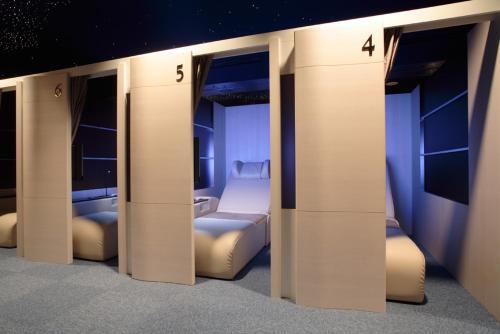
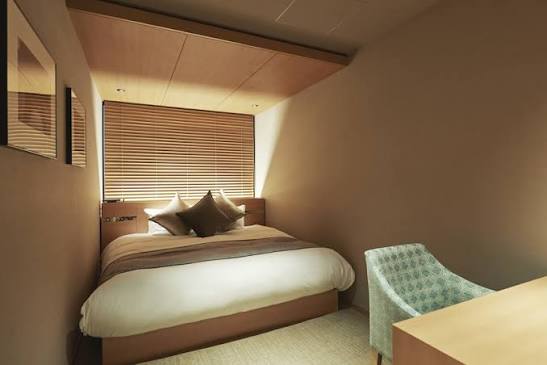
THE PLACE | Kyobashi is a busy interchange on the east side of Osaka, and this house sits in the working part of it. What you book here is larger than a capsule and smaller than a hotel room: a cabin with a door of its own, arranged along quiet passages with the bathing rooms shared.
THE BUILDING | First Cabin builds its accommodation as cabins rather than berths, with light partitions instead of structural walls and a shared bathing area serving the whole section. This is one address of several the operator runs, so it is the Kyobashi house that is described here and not the group as a whole.
WHY IT IS LIKE THAT | The format sits deliberately between two others. A traveller who wants to stand up, close a door and leave a case on the site pays for that and no more, and a building can hold many such cabins because the partitions carry nothing but themselves.
WHAT IT ASKS OF YOU | Shoes come off when you reach the accommodation section, and stay off. The cabins are not soundproof, so the house asks for the manners of a shared house rather than those of a hotel: no calls late, and nothing wheeled along the passages at night.
WORTH A NOTE | This is one address among several under the same name; confirm the Kyobashi house rather than the brand alone.
Hotels are described here from published material and set down in our own words. Nothing on this page is a survey, an inspection or advice about a building, and the month at the end of an entry is when that material was last opened.